
The page in detail
Every title is set on the same page, designed for someone who reads slowly and writes in the margin.
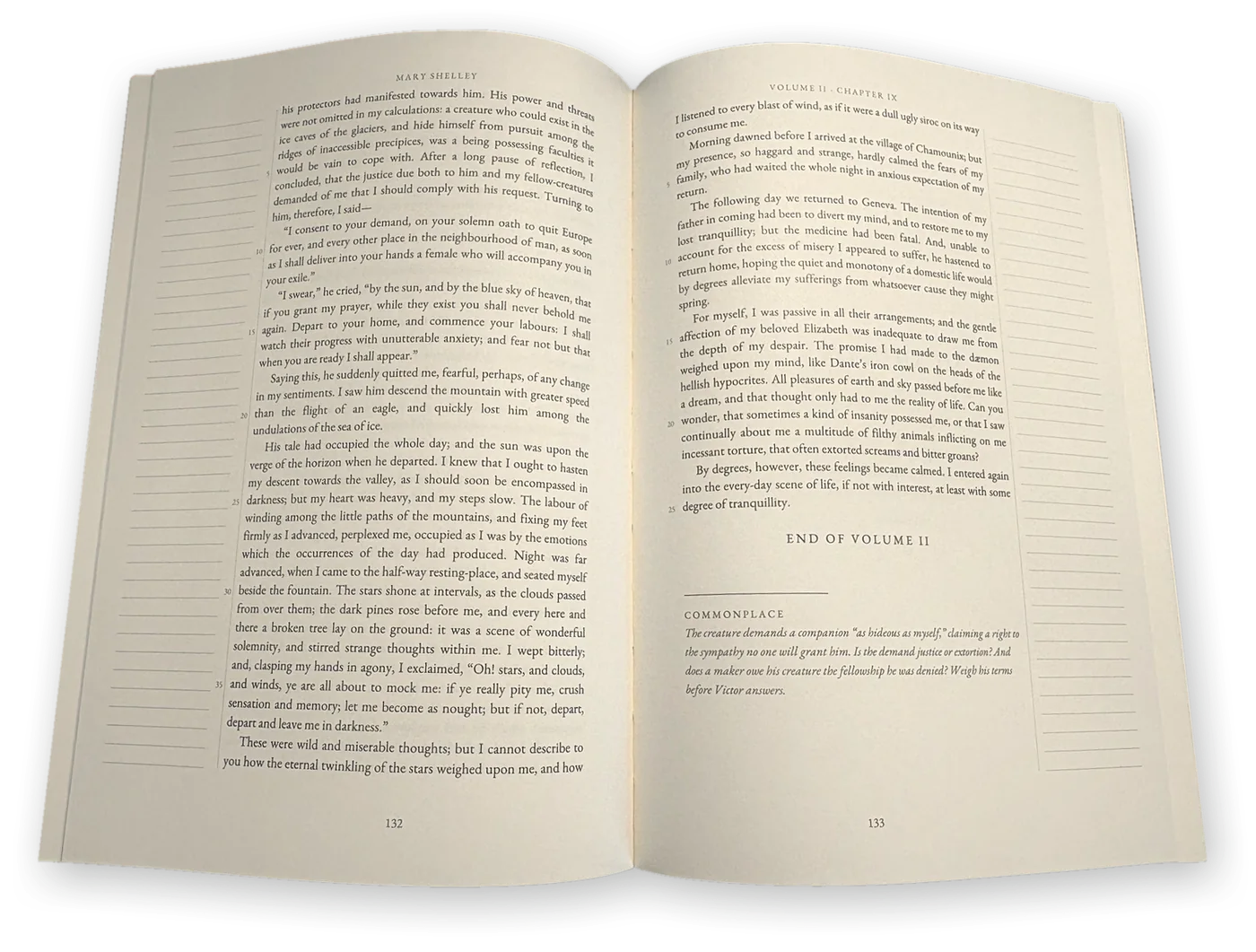
- Numbered lines
- The ruled margin
- The prompt
Volume II · Chapter III.
“It is with considerable difficulty that I remember the original æra of my being: all the events of that period appear confused and indistinct. A strange multiplicity of sensations seized me, and I saw, felt, heard, and smelt, at the same time; and it was, indeed, a long time before I learned to distinguish between the operations of my various senses.
The opening of page 87, set in the book’s type and enlarged.
The type
The text is EB Garamond, a modern revival of the roman type Claude Garamond cut in Paris in the 1500s. It is set at 11 points on a 15-point line, which leaves room to underline a phrase without running into the line below.
4.1 inches · about 67 characters
By degrees, I remember, a stronger light pressed upon my nerves, so that I was obliged to shut my eyes. Darkness then came over me, and troubled me; but hardly had I felt this, when, by opening my eyes, as I now suppose, the light poured in upon me again. I walked, and, I believe, descended; but I presently found a great alteration in my sensations.
Page 87 again, at the book’s measure.
The line
The text block is 4.1 inches wide, and the average line holds sixty-seven characters, within the range book typographers have long recommended for prose. At that length the eye finds the start of the next line easily.
The page
A full page holds thirty-nine lines, on the same grid from the first page of a book to the last. Every fifth line is numbered, and the numbers start over on each page, so “page 132, line 15” is the same line in every copy a class holds.
A right-hand page, to scale.
The margin
The outer margin of every page is two inches wide. A ruled column just over an inch and a half wide runs down it, with a light gray rule level with each line of text, so a note sits beside the line it answers.
But I consented to listen; and, seating myself by the fire which my odious companion had lighted, he thus began his tale.
Commonplace
“I ought to be thy Adam,” the creature says, “but I am rather the fallen angel.” Ask what a made thing may justly demand of the one who made it. Mark his first claim, and decide whether it is just.
The close of Volume II, Chapter II, on page 86 of the first printing.
The prompt
At the close of each chapter, beneath a rule and the word Commonplace, a short prompt in italic sends the reader back into the chapter. It always shares its page with the chapter’s last lines.
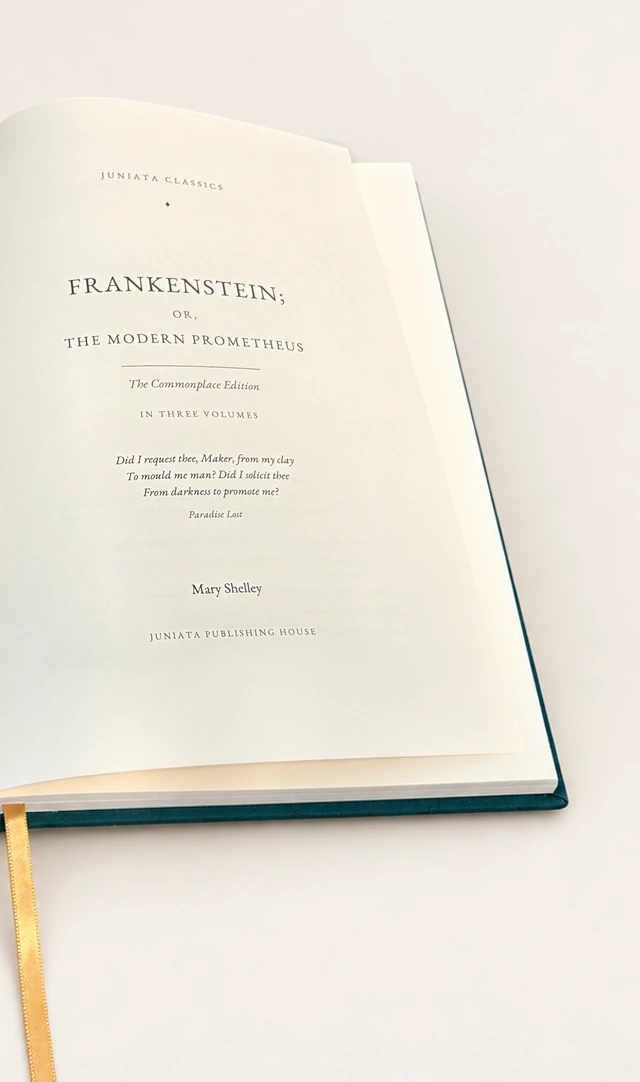
The paper
The pages are cream, uncoated stock at 120 gsm, about 81 lb text, heavier than the paper in most novels. It takes pencil and pen, and ink does not bleed through to the other side.
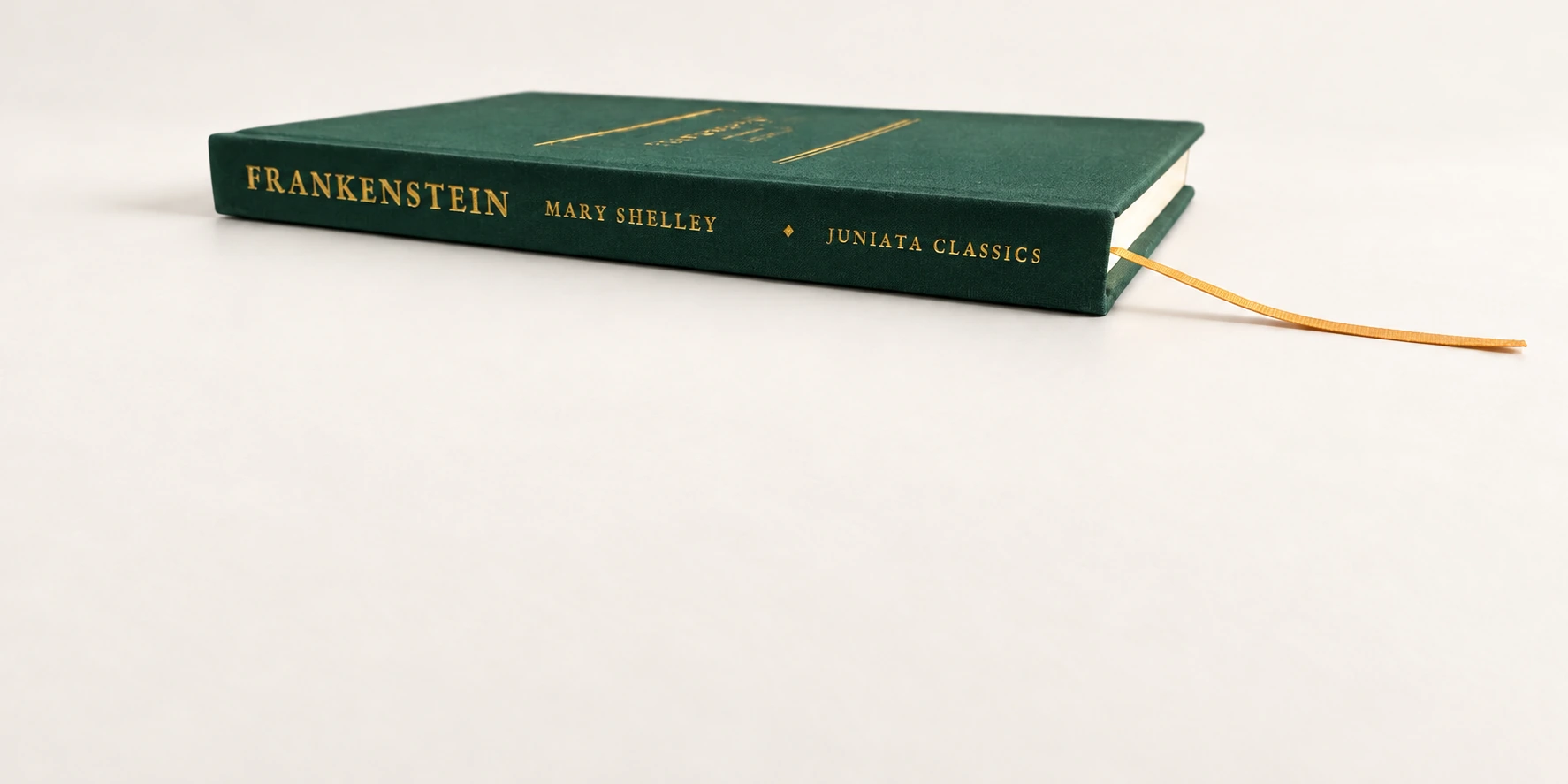
The binding
The sheets are folded into sixteen-page signatures and sewn, then cased in cloth over 3 mm board, with a ribbon marker. A sewn book opens well for writing and holds together through years of handling.
To see the page at full size, ask for a review copy of Frankenstein.